
Introduction: Mental Health Is Not Passive
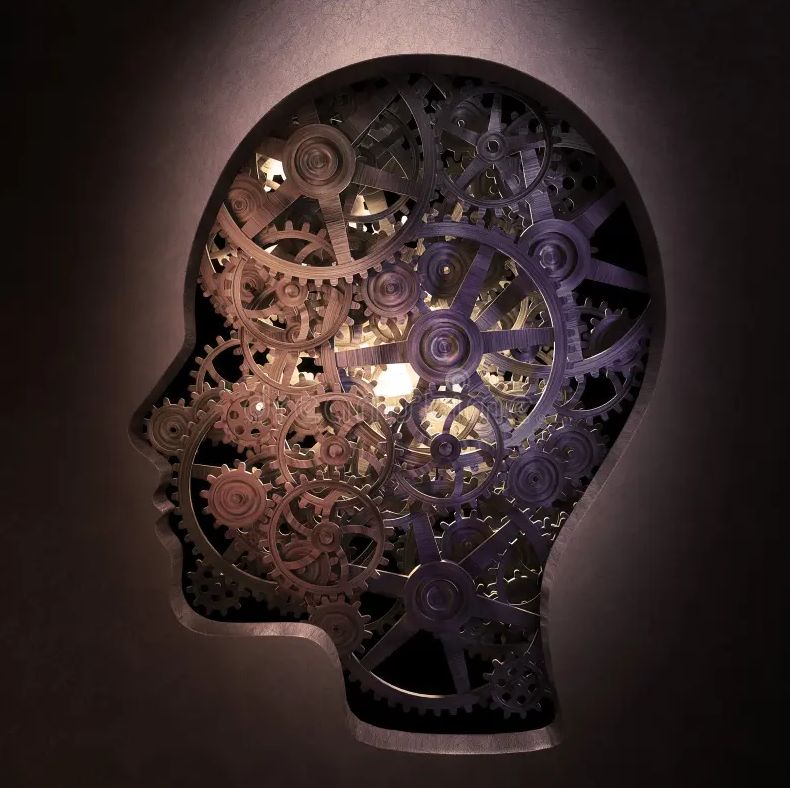
If you neglect your physical health, the consequences show up quickly—fatigue, pain, reduced capacity. Most people understand that the body requires consistent care. But the same principle applies to the mind, and it’s far less recognized. Your mental environment—how you think, interpret, feel, and respond—does not maintain itself. It is either being shaped deliberately, or it is being shaped by default. And when left to default, it tends toward noise, reactivity, and inconsistency. What’s often missing from conversations around mental health is a coherent, integrated view. Instead of seeing the mind as a system, we isolate pieces—stress, mindset, emotion—without understanding how deeply interconnected they are. If you want clarity, stability, and control, you don’t fix one piece. You refine the entire environment.
The Mental Environment: A System You Are Always Living Inside
You don’t step in and out of your mental environment—you live in it continuously. At any moment, your experience is being shaped by a combination of how clearly you can think, how you interpret what’s happening, what you believe about yourself and the world, how stable or reactive your emotional patterns are, and where your attention is directed. You can think of it less like a single mechanism and more like an ecosystem. When one part is off, it influences everything else. A lack of clarity in thinking feeds poor interpretations. Poor interpretations trigger emotional reactions. Those reactions reinforce certain beliefs. And over time, those beliefs become part of your identity. Left unexamined, the system reinforces itself—whether it’s working for you or against you.
Cognitive Function: Your Thinking Is Biological
It’s easy to treat thinking as something abstract, but your ability to think clearly is grounded in biology. If your body is undernourished, inflamed, sleep-deprived, or chronically stressed, your brain reflects that state. You don’t just “feel off”—your capacity to process, focus, and decide is genuinely reduced.
You’ve probably experienced things like trying to concentrate when exhausted, making worse decisions under stress, and feeling mentally foggy after poor nutrition. This isn’t a lack of discipline—it’s a degraded system.
There’s a simple but often overlooked truth here: your mental performance cannot exceed the condition of the body supporting it.
Emotion: A Signal That Often Becomes a Driver
Emotion plays a powerful role in shaping experience, but it’s important to understand what it actually is. At its core, emotion is generated based on whether you perceive something—an event, a person, a situation—as safe, favorable, or beneficial to you. That means it’s not giving you objective truth. It’s giving you a subjective evaluation. In a balanced state, you can observe and assess clearly. But when emotion intensifies, the system shifts. Your attention narrows. Your interpretation becomes biased. The urgency to react increases. In that sense, emotion is not a baseline—it’s a departure from balance, a form of internal stress signaling.
Why Emotional Patterns Become So Persistent
One of the more subtle dynamics is how quickly emotional states become conditioned. If you repeatedly experience certain patterns—stress, frustration, anxiety—the body adapts. Those states become familiar. Even predictable. And familiarity has a strange effect: it can feel normal, even when it’s not optimal. Over time, people can begin to unconsciously recreate the same emotional cycles. Not because they want to suffer, but because the system has been trained to operate that way—psychologically and chemically.
When Emotion Starts Making Decisions
This is where things become more consequential. Most people don’t notice how often their decisions follow a simple pattern: they feel something, react to it, and then justify the reaction afterward. It feels natural, but it’s unreliable. A more effective approach is slower and less reactive: observe what’s happening, assess it clearly, and then decide how to respond. The difference between those two approaches is the difference between being driven by your internal state and directing it.
The Influence Problem
There’s another layer to this that’s worth being direct about. If your behavior is heavily influenced by emotional states, then those states can be influenced externally. It doesn’t take much—fear, urgency, outrage, desire. These are easily triggered and widely used. When they’re activated, they tend to bypass careful evaluation. That’s not just a personal issue—it’s a loss of control.
Beliefs and Identity: The Structure Beneath the Surface
Beneath your moment-to-moment thinking are deeper structures that quietly shape everything. Your beliefs determine how you interpret reality—what you notice, what you dismiss, what you assume to be true. And most of the time, they operate automatically. Over time, these beliefs begin to organize into something more stable: your identity. Your identity is essentially the story you tell about who you are. For many people, that story becomes fixed. It feels solid, consistent, and dependable—but also limiting. When identity becomes rigid, it resists change. New information gets filtered out if it doesn’t fit the narrative. A more developed approach is flexibility. The ability to update your view of yourself as you grow. And beyond that, a kind of fluidity—where identity becomes something you use, rather than something that confines you. The difference is subtle, but powerful. One locks you into patterns. The other allows you to evolve.
Worldview: Does Your Life Make Sense to You?
If identity is who you think you are, your worldview is how you think everything works. It shapes your sense of meaning, direction, and place in the world. And yet, most people never consciously build it. They inherit fragments—from family, culture, education—and try to operate within them. This often leads to a quiet form of misalignment. You may be pursuing goals that don’t actually fit your deeper assumptions about life. Or holding beliefs that conflict with your lived experience. A useful question here is simple: Does your life actually make sense within the way you see the world? If not, there’s friction in the system.
Social Calibration: The External Reflection of Your Internal State
Your mental environment doesn’t just exist internally—it shows up in how you interact with others. How accurately you read people, how clearly you communicate, how well you regulate yourself in conversation—all of this reflects the quality of your internal system. When this is off, interactions become strained. Misunderstandings increase. Friction builds. When it’s well developed, things tend to feel smoother. Not because life is easier, but because your interpretation and response are more accurate.
Attention: Where Everything Begins
Every part of your mental environment is shaped by what you pay attention to. Attention determines what gets reinforced, what becomes familiar, and ultimately what feels real. Most people don’t consciously direct it. It’s pulled by whatever is most stimulating—notifications, media, noise, urgency. But when attention becomes intentional, something shifts. You gain the ability to step out of automatic patterns and decide what actually deserves focus. That alone begins to reorganize the system.
The Mind–Body Feedback Loop
The connection between physical and mental health runs in both directions. When the body is compromised—through poor nutrition, lack of sleep, chronic stress—the mind follows. Clarity drops. reactivity increases. decision-making suffers. But the reverse is just as important. The body is constantly responding to signals from the mind. Persistent fear, stress, insecurity, or self-doubt aren’t just “mental states”—they produce real physiological effects. Hormones shift. the nervous system adapts. inflammation increases. Over time, those patterns can degrade physical health. This creates a loop: the body affects the mind, and the mind reinforces the state of the body.
Processing Experience: A More Effective Approach
At the center of all of this is how you process what happens to you. If your default is resistance—pushing against reality, reacting immediately, interpreting situations as threats—you create unnecessary stress.
If instead you learn to see things as they are, accept them before reacting, interpret them in a way that expands options, then you reduce that stress significantly. From that position, you’re more stable, more clear, and more capable of responding effectively.
Conclusion: Mental Health Is Something You Can Build
Mental health isn’t something you either have or don’t have. It’s something you encourage and develop. It reflects how well your internal system is functioning: your biology, your thinking, your emotional patterns, your beliefs, your identity, your attention, your worldview. When these are left unmanaged, the system becomes reactive and inconsistent.
When they are refined:
- thinking becomes clearer
- reactions become more controlled
- decisions become more intentional
And what emerges isn’t just “better mental health,” but a fundamentally different way of experiencing life: more clarity, more stability, more control—and far greater capacity to engage with the world in a meaningful, effective way.